
Innovation incubator #3
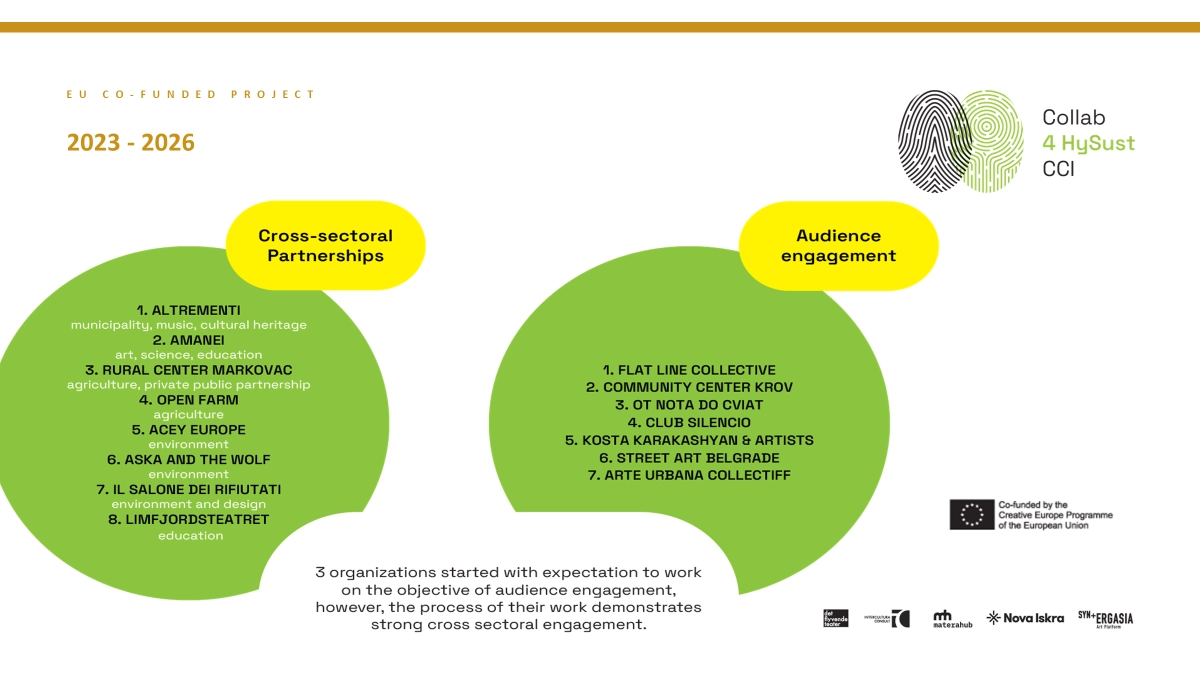
The EU-supported Collab4HySustCCIs partnership brought together 5 partners and selected 15 creative organizations from Bulgaria, Greece, Serbia, Italy and Denmark strengthening creative offers through innovative practices. The project’s innovation incubation programme addressed two key areas:
- Digital & Hybrid Innovation
- Cross-sector Collaboration
Each organizations explored new approaches to creative production, collaboration and audience engagement. The results demonstrate the potential of the incubation model to help creative organizations respond to technological, social and sectoral change while creating new opportunities for sustainable development.
Read more in the Knowledge Capitalisation Report – Collab4HySustCCIs which is an inspiration for creative collaborations across the South-East European region.Subscribe to our newsletter to follow related initaitives.
The project outcomes were part of the Creative Skills Week 2025 – Crossinnovation session supported by Sofia Municipality, CrossCon 2025 – Subtopia Sweden, and PechaKucha Night Sofia, extending the visibility of the participating organizations and sharing the project’s approach with wider professional networks.
The Collab4HySustCCIs project is co-financed by the European Union’s Creative Europe Programme, supported by the National Culture Fund of Bulgaria and Plovdiv Municipality -associated partner.
Study "Humans at play: Creators and Users"
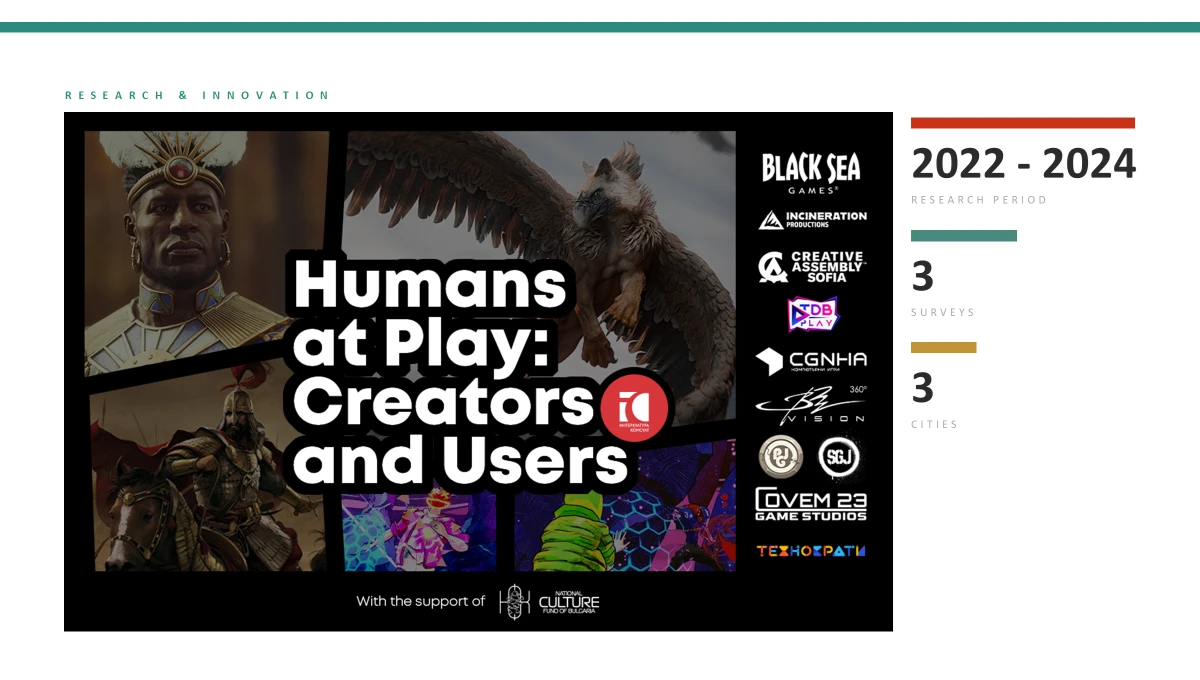
Led by Intercultura Consult, the Humans at Play study brought together more than 20 partners from the business, education and cultural sectors, creating a broad network of stakeholders from across Bulgaria. Activities in Sofia, Veliko Tarnovo and Vratsa, connected different regions, professional communities and audiences within the emerging video game and creative ecosystem.
Conducted in 2022–2023, the national study Humans at Play: Creators and Users engaged more than 1,300 participants. It was designed to explore the perspectives, needs and attitudes of key stakeholders in the Bulgarian video game ecosystem, looking at the sector as a field for skills development, creative innovation and professional opportunities. It examined the connections between skills development, industry needs and public perception. It identified opportunities for further skills development, collaboration and innovation within Bulgaria’s creative and video game sectors. In 2024, the study placed particular focus on women, AI and the video game industry in Bulgaria and the wider Balkan region - exploring trends and perspectives.
The results of Humans at Play have been shared internationally, including through publications in the Arts Management Network and presentations at professional events such as the Nordic Game Conference.
The results have been shared internationally, including through publications in the Arts Management Network and presentations at professional events such as the Nordic Game Conference. Read the Humans at Play study and results here and find the presentations in the links.
The project was supported by the National Culture Fund of Bulgaria and Veliko Turnovo Municipality.
Competences & micro-credentials
Intercultura Consult is an associate partner in the Gamebadges project (2024–2026), led by Metropolia UAS (Finland) and co-financed by the Erasmus+ program of the EU.
The project delivers:
- A competency map for the game industry.
- Unique training opportunities for EU game professionals to acquire or validate game skills.
For more opportunities, subscribe to our newsletter.
Training & capacity-building
creatives, culture & heritage professionals
Vitality Training Programme
Supported by: National Culture Fund of Bulgaria & National History Museum Hristo G. Danov (Plovdiv)
Overview:
A dedicated program in Sofia and Plovdiv for cultural and creative organizations across Bulgaria.
Impact:
33 participants strengthened their confidence, strategic vision, and audience engagement skills.
7 international and local experts led explorations into audience development strategies and new business models.
Collaboration:
Brought together cultural organizations, artists, and creative businesses to:
✔ Exchange experiences
✔ Develop new partnership ideas
✔ Build stronger audience connections
Resources:
🎥 3 training videos (in BG) showcase the program’s practical outcomes .
The project was supported by the National Culture Fund of Bulgaria and the National history Museum Hristo G Danov in Plovdiv.
Incubators 1 & 2
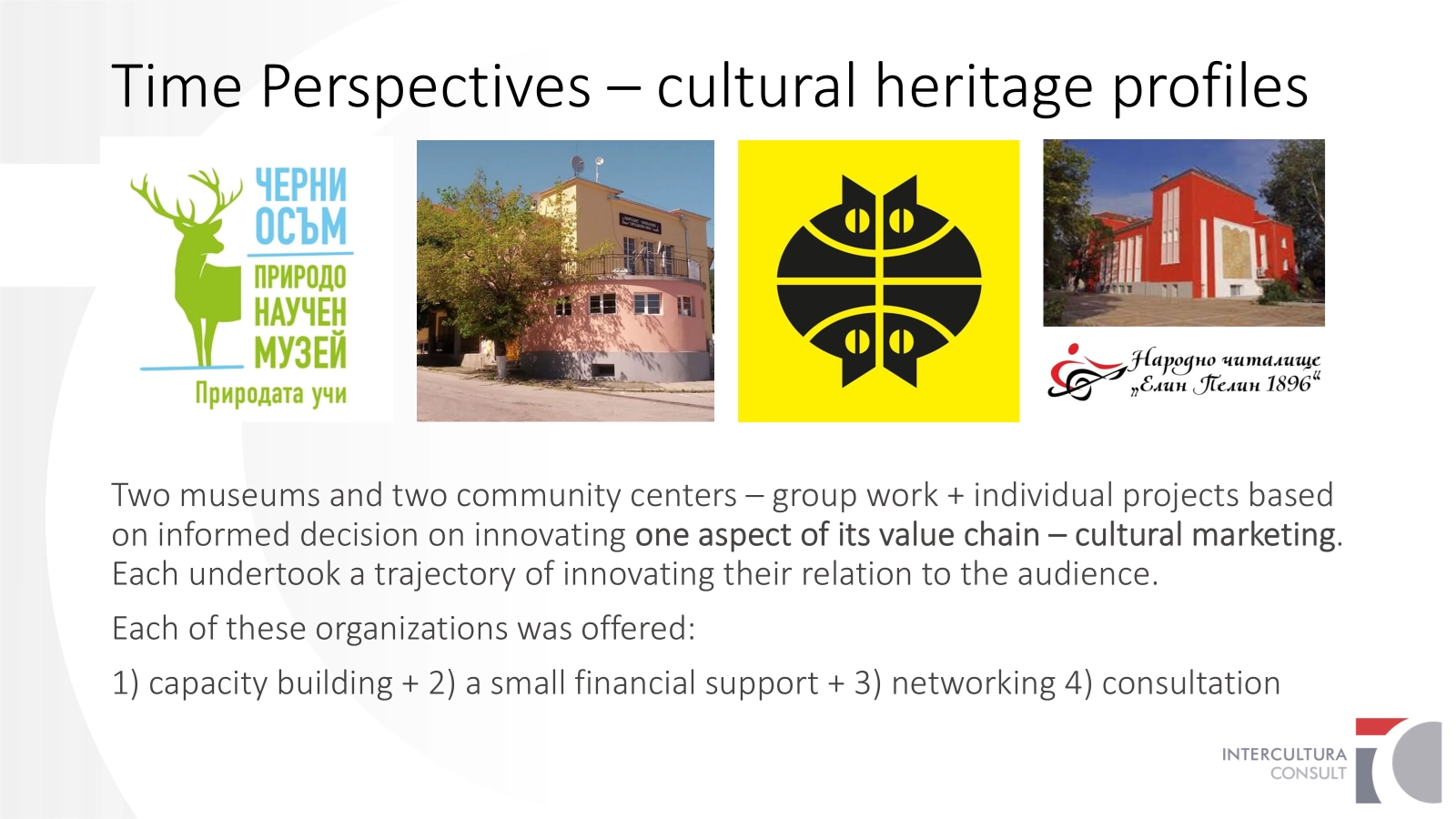
Time Perspectives (2021–2022) & Reconnect (2020–2021)
These two micro-incubators, designed and led by the ICC team, focused on fostering innovative cultural offers through cross-sectoral collaboration. The need for innovative digital cultural offers and targeted creative collaboration emerged from opportunities in the digital age (Cherrington & Koleva, 2019). Both incubators utilized tailored methods for experimentation, expert support, mentorship, monitoring, impact assessment, and communication of results to diverse audiences, including museums, cultural centers, communities, and academic groups.
The projects were supported by the National Culture Fund of Bulgaria
Time Perspectives: Long-Term Benefits of the Culture-Audience Relationship
This incubator involved four organizations in smaller Bulgarian settlements:
- Nature Science Museum (Cherni Osam)
- Community Centre "Prosveta-1881" (Kostenec)
- Community Centre "Elin Pelin 1896" (Elin Pelin)
- "House of Humour and Satire" (Gabrovo)
Each organization received a small innovation grant to collaborate with external artists, experts, and tourism sector partners. They also obtained an analysis of their key target audience and guidelines for improving or designing new cultural offers.
Reconnect: Audiences and Cultural Content in the Digital Environment
This incubator focused on cultural offers in the digital environment and partnered with three free arts scene organizations:
- "Male Male" (puppet theatre company) – Piloted new forms of virtual/on-site audience engagement.
- "36 Monkeys" – Conducted a science theatre/museum audience pilot.
- "Meeting Points" – Experimented with a self-guided "spice tour" app for multicultural city offers.
Each organization received micro-funding to pilot new digital offers. Additionally, a large-scale national survey provided vital insights for the CCI sector. (Reconnect: Cultural Content and Audiences in the Digital Environment 2021).
European Stories / "Истории от Европа"
community-based tours
Award: European Language Label (2023) for the Knowledge Alliance project, led by Le LABA (France) with partners from Bulgaria, Ireland, Italy, and Romania.
Impact During COVID-19:
Encouraged cultural, creative, and tourism professionals to explore local, community-based tourism strategies in uncharted territory.
Intercultura's role:
- Conducted field research and mapped organizations, initiatives, skills needs, and new business models.
- Designed, tested, and delivered Bulgaria’s first training course for story-based cultural heritage mediators. Guide to Design a Local Tour (English)
Professional development
Southeast Europe
Intensive Training Program for Cultural Professionals
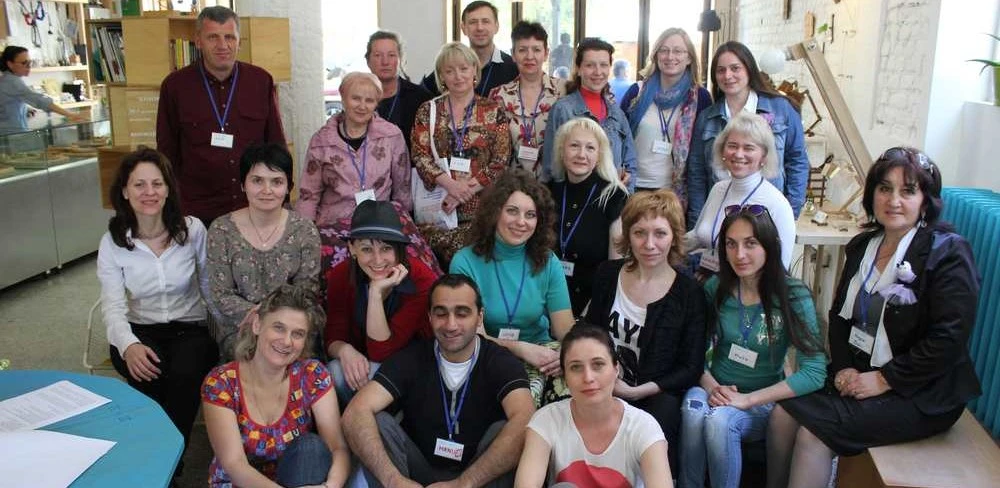
Cultural managers, professionals, and artists gathered for an intensive training program across three Bulgarian cities: Sofia, Kostenets, and Plovdiv (European Capital of Culture in 2019). The program featured carefully designed sessions, including:
- Analysis of the strategy for the development of heritage and tourism in Sofia’s Old Town
- Sofia’s cultural policy strategy
- New business models in the cultural sector
The project was managed by the leading Ukrainian partner, "EcoArt".
Impact in 2025
By 2025, many Ukrainian colleagues involved in the project were internally displaced or had migrated to other EU countries. However, the knowledge and experience gained through the program left a lasting impact on professional networks in Bulgaria and the Eastern EU countries.